
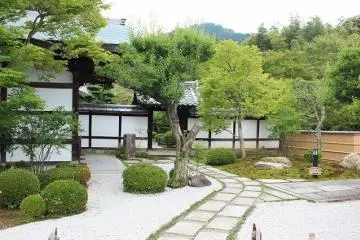
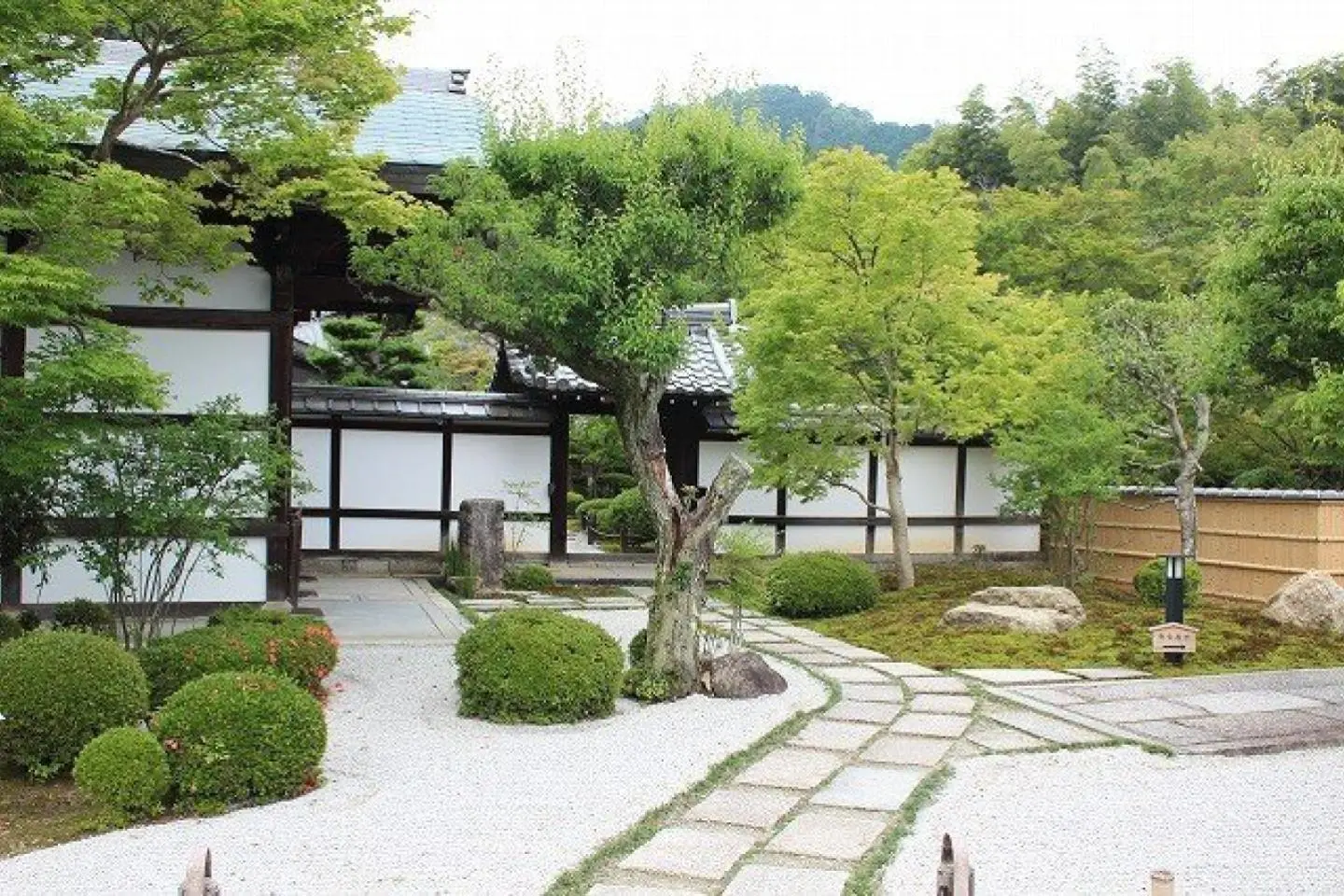
Enkō-ji, is a Zen Buddhist temple located near the Shugakuin Imperial Villa at Sakyō-ku, Ichijo-ji, Kotani-cho, in northeast Kyoto, Japan. It is famous for its fall foliage and Suikinkutsu. [Wikipedia]
Autumn Foliage viewing at Enkoji from 15 November until 10 December 2020 requires a reservation.
/135.79706132412,35.045092555683,9/397x132?access_token=pk.eyJ1IjoiamFwYW50cmF2ZWxtYXBzIiwiYSI6ImNqbXBtOXYxbDB5Z3ozbHFrazJuYWMwOGYifQ.v15fy_mcFWtgopmz8PhwqA)
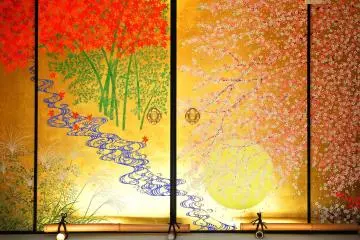
The gorgeous autumn leaves in the Garden of Ju-gyu at Enkoji Temple in Kyoto are a magical sight to behold.
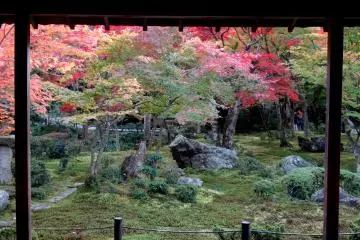
One of Kyoto's best foliage sites is Enkoji Temple, located in the northeastern part of the city along the eastern mountains.
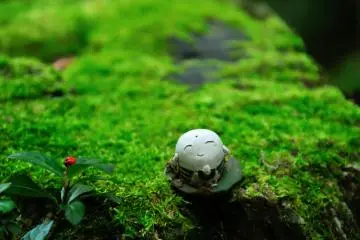
Beautiful autumn leaves surround the belfry, and the smiling faces of adorable jizo statues bring happiness to visitors of Enkoji Temple in Kyoto.
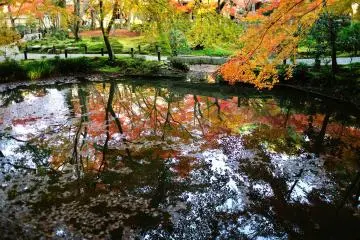
The breathtaking beauty of Seiryuchi Pond, the oldest pond in Rakuhoku area, as the water reflects autumn leaves at Enkoji Temple in Kyoto.
Захватывающая дух, симметричная красота реальных и отраженных листьев, загипнотизировала меня, когда я любовался прудом в храме Экондзи в Киото.
Les magnifiques feuilles d'automne du jardin Ju-gyu, au temple Enkō-ji de Kyoto, offrent un spectacle magique à voir.
Salah satu lokasi dedaunan terbaik Kyoto adalah Kuil Enkoji, yang terletak di bagian timur laut kota di sepanjang pegunungan timur.
Les visages souriants des statues de Jizo apportent le bonheur aux visiteurs du Temple Enko-ji à Kyoto.
Một trong những địa điểm ngắm lá tốt nhất Kyoto là đền Enkoji ở phía đông bắc của thành phố dọc theo các ngọn núi phía đông.
Mùa thu tuyệt đẹp xuất hiện trong khu vườn Ju-gyu tại đền Enkoji ở Kyoto
Vẻ đẹp mê hồn của ao Seiryuchi, ao nước lâu đời nhất ở vùng Rakuhoku, khi mặt nước phản chiếu lá thu tại chùa Enko, Kyoto.
Lá thu tuyệt đẹp xung quanh tháp chuông, và những khuôn mặt tươi cười của các bức tượng jizo đáng yêu mang lại hạnh phúc cho du khách đến thăm chùa Enko ở Kyoto.
In Japan's former imperial capital of Kyoto, Enkoji is a temple where you can sit and look out over beautiful Japanese gardens, and perhaps meet a monkey or two. It's also the site of a temple school, Rakuyo, founded by Ieyasu Tokugawa, the first Shogun of Japan.

교토의 북쪽에있는 카미가모 신사는 치유의 힘으로 알려져 있습니다. 그리고 내부의 신사인 카타오카샤는 짝짓기의 신으로 알려져 있습니다. "겐지모노가타리"의 저자 인 무라사키 레이디도이 신을 깊이 숭배했다고 합니다.
시조 카라스마의 호텔 닛코 프린세스 교토는 싱글 룸 (24㎡)부터 트윈 룸 (48㎡)까지 갖춘 넓적한 객실을 갖추고 있다. 호텔 스태프들은 트레이닝을 잘 받고 최고의 예절과 접대를 한다.
본격적인 나폴리·피자를 제공하는 레스토랑 "다·유키"는 교토 오카자키에 있다.손님들은 대부분 예약을 해오므로 갑자기 가도 들어갈 수 없을 것이다. 예약을 권한다. 기대를 저버리지 않는 명소이다.
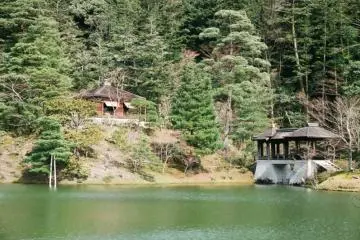
Shugakuin Imperial Villa, located on the northeastern outskirts of Kyoto City, is a stunning complex of traditionally designed buildings and gardens interwoven into paddy fields. It was constructed from 1655 to 1659 by Emperor Gomizuno and presently, is managed by the Imperial Household Agency. The complex features three sections–the Upper, Middle, and Lower Villas–which are connected by tree-lined pathways. Between the villas, the majority of the land is designated as paddy fields and is still cultivated by local farmers today. The most celebrated characteristic of the villa is its gardens. Each section has its own exquisite landscaping that utilizes the Shakkei method of gardening. This process integrates the surrounding scenery into the garden’s design for a more dynamic and three-dimensional viewing experience. The gardens are especially popular in spring when the cherry blossoms and seasonal flowers are in full bloom, and in autumn when the surrounding mountainscape turns fiery. The Upper Villa’s Rin’untei Pavilion is also a noteworthy spot as it offers lovely views of Yokuryūchi pond, Kyoto City, and surrounding naturescape. Although you cannot enter buildings, some are left open so you can have a peek at their tatami floors and beautifully painted panels. In order to enter the villa, you must submit an application and join a guided tour. You can register online or in person. Make sure to have your passport or a government-issued ID on hand. Same day registration is permitted but is run on a first-come-first-served basis. The tour lasts about an hour and 20 minutes and includes visits to all three villas. Although the tour is only available in Japanese, the facility offers audio guides in English, Chinese, French, Korean, and Spanish free of charge.
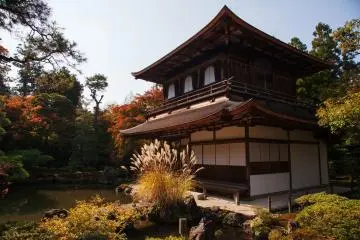
The Ginkakuji, also known as the“ Silver Pavilion ”, is a Buddhist Zen temple in the Higashiyama area in northeastern Kyoto. The surrounding gardens from the Edo period were designated a special historical site in 1952, and UNESCO took the Ginkakuji together with others Buildings in 1994 in the World Heritage Site Historic Kyoto. Construction of the complex began in 1482 and was intended to be the retirement home of the then shogun Ashikaga Yoshimasa. However, it was not completed until his death, so it was converted into a temple according to his request. Two buildings have been preserved in their origins, of which the Kannon den is the symbol of the temple and is usually called the "Silver Pavilion", while the Togu-do contains one of the oldest rooms for the tea ceremony. The complex is also known for its moss garden and the extraordinary sand garden known as the “lake of silver sand”. In contrast to the “Golden Pavilion”, the Ginkakuji is not covered with silver. The name probably came from the similar architecture of the two buildings.
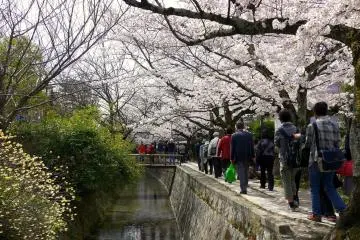
The Philosopher's Path (哲学の道, Tetsugaku no michi) is a pedestrian path following a canal lined by cherry trees between Ginkaku-ji and Nanzen-ji. The path earned its name because an influential 20th century philosopher, Nishida Taro, is thought to have used it for daily meditation.